Our carbon emissions explained
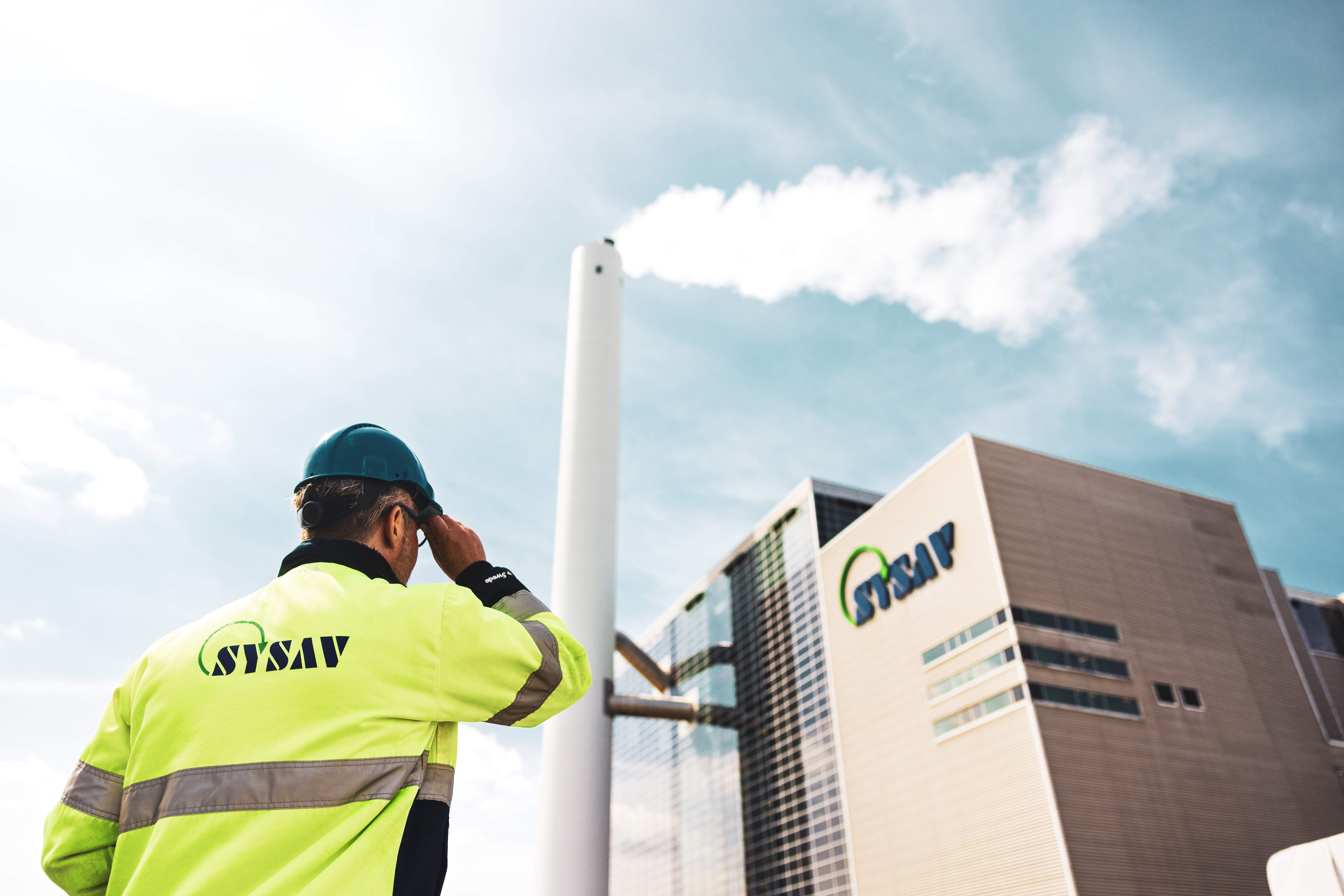
Sysav’s waste-to-energy plant in Malmö annually treats 630 000 tonnes residual waste from households and industry, waste that cannot och should not be recycled in other ways. This includes contaminated materials, mixed waste streams, and products designed in ways that make material recovery difficult or impossible.
Why do we emit so much CO₂?
Each year, the plant supplies around 70% of the district heating used in Malmö and Burlöv and generates electricity corresponding to roughly 10% of Malmö’s total electricity consumption. At the same time, the treatment results in approximately 600,000 tonnes of CO₂ emissions annually.
These emissions arise because the waste we treat reflects the society we live in. Residual waste contains both fossil and biogenic materials. As long as society continues to generate residual waste that cannot be recycled, emissions from waste treatment will remain. Through the SkyZero project, Sysav is developing a carbon capture solution that can significantly reduce these unavoidable emissions while allowing waste treatment to continue delivering heat and electricity that the region depends on.
Fossil and Biogenic CO₂
The carbon dioxide released from Sysav’s waste-to-energy plant consists of both fossil and biogenic CO₂.
Fossil CO₂ originates from materials such as plastics and other products made from oil. These emissions contribute directly to increasing atmospheric carbon levels and must be reduced to meet climate targets.
Biogenic CO₂ comes from organic materials such as paper and wood. When this carbon dioxide is captured and permanently stored instead of being released, it can create negative emissions by removing carbon from the natural cycle.
Because waste contains both fossil and biogenic fractions, carbon capture at Sysav has a particularly strong climate impact. Through SkyZero, emissions can be significantly reduced while also enabling permanent removal of biogenic carbon dioxide from the atmosphere.